Indoor Playground Design Ideas: 7 Powerful Ways to Turn an Empty Space Into a Destination
Indoor Playground Design Ideas Start Before Construction
Indoor playground design ideas should begin before construction, not after the space is already filled with equipment. An empty commercial shell may look simple, but every early decision affects how families move, how children play, how parents supervise, and how staff operate the space. Strong indoor playground design ideas connect creativity with business logic so the final environment feels memorable, organized, and easier to use.
Why Indoor Playground Design Ideas Need Strategy
The strongest indoor playground design ideas are not random features placed around a room. They are decisions about flow, zoning, sightlines, materials, storage, safety, and emotional experience. Children need spaces to move, imagine, pause, and explore. Parents need visibility and comfort. Staff need clear circulation and practical storage. Owners need a destination that families want to return to.
1. Start With Flow
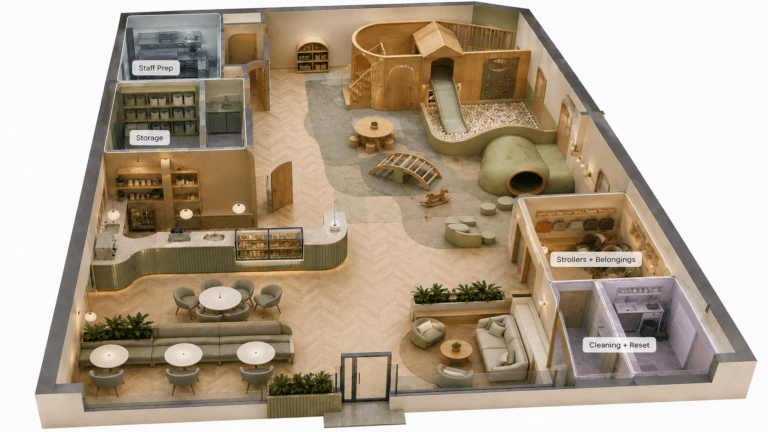
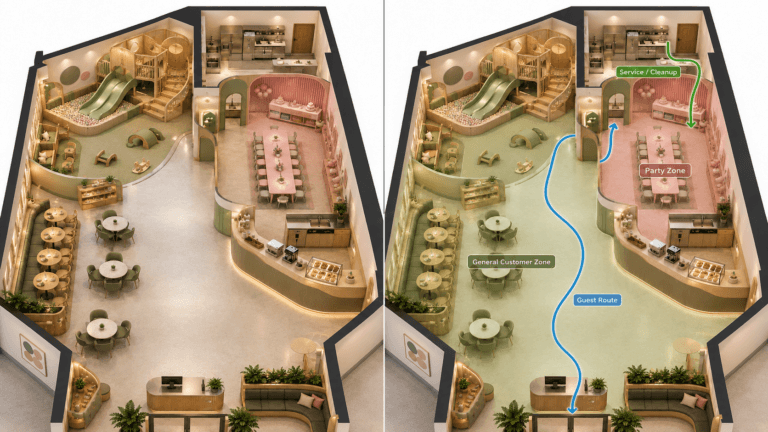
Before choosing play features, plan how people enter, move, wait, sit, and transition. Good circulation can make a small space feel calmer and a large space feel easier to understand. Indoor playground design ideas should always include a clear path from entry to play zones, parent seating, storage, and activity areas.
2. Use Zones to Organize Energy
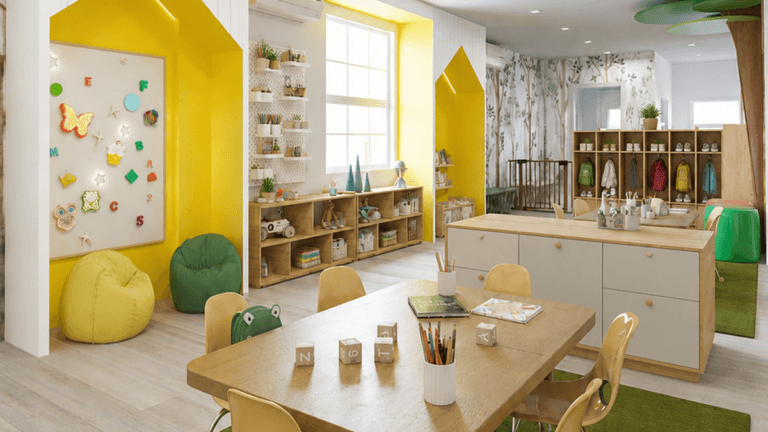
A successful play environment needs zones for active play, sensory moments, pretend play, table activities, quiet breaks, and parent comfort. Zoning helps children understand what each area is for. It also helps adults supervise without feeling lost in visual clutter.
3. Plan Parent Sightlines
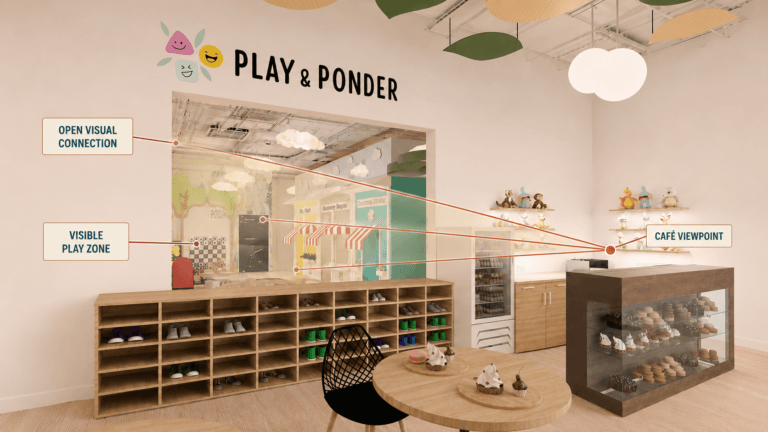
Parents feel more comfortable when they can see the main activity areas. Indoor playground design ideas should consider seating locations, low partitions, open views, and the relationship between active and calm zones. Better sightlines can increase trust and improve the overall customer experience.
4. Balance Active Play With Calm Moments
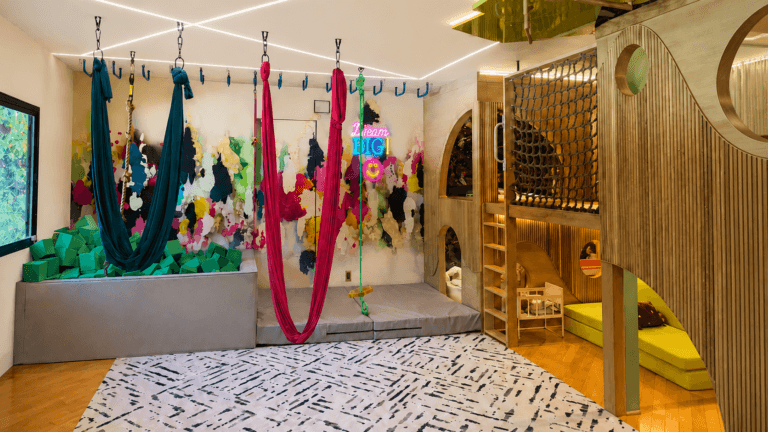
A children’s destination should not feel loud everywhere. Reading corners, sensory walls, soft seating, and table activities give children places to reset. These quieter moments can make the overall indoor playground feel more welcoming and less overwhelming.
5. Select Materials for Daily Use
Commercial children’s interiors need materials that can handle cleaning, movement, spills, and heavy traffic. Flooring, seating, wall finishes, and play surfaces should be chosen for durability as well as atmosphere. For public play environments, owners can also review the CPSC Public Playground Safety Handbook as an external safety reference.
6. Create a Memorable Story
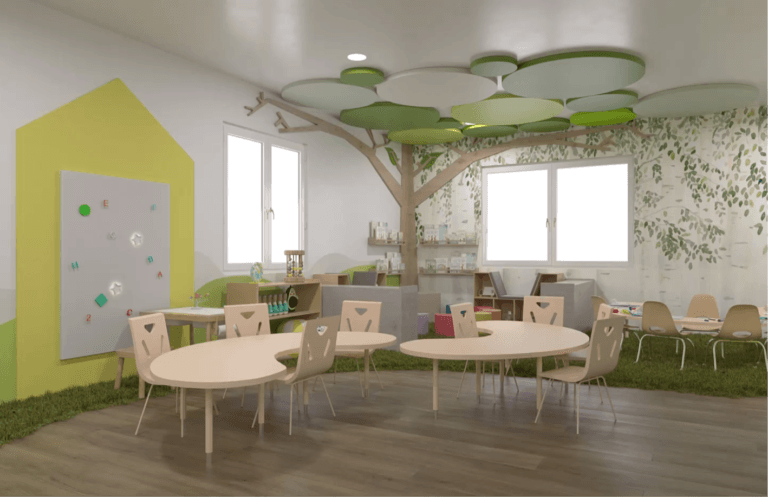
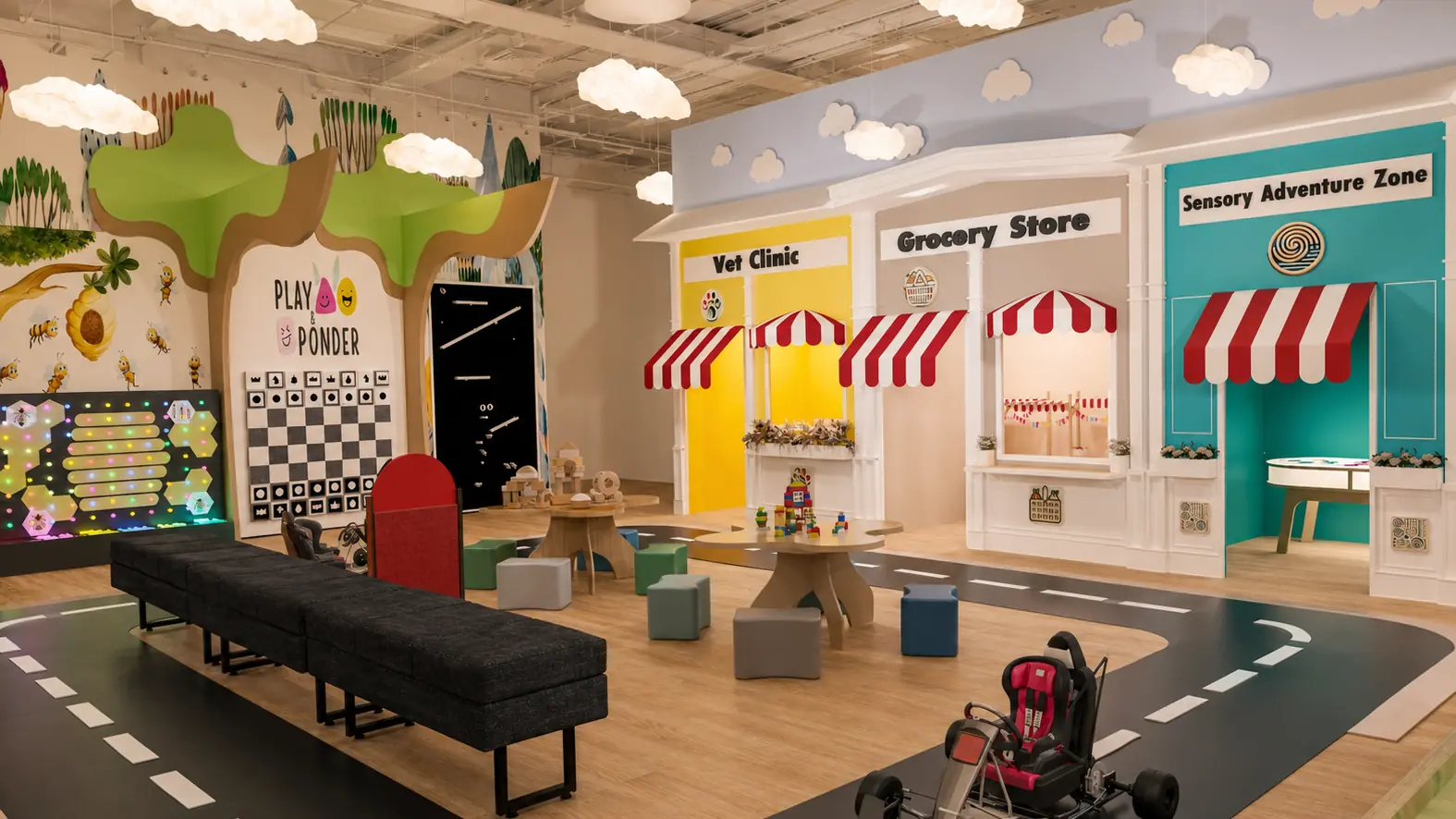
Play & Ponder shows how indoor playground design ideas can become a clear visual identity. Nature-inspired murals, pretend play storefronts, sensory features, activity tables, parent seating, and a child-friendly road track all work together. The result is not just a room with equipment. It is a destination with a story.
7. Connect Design to Business Goals
Every design choice affects the business. Clear flow can reduce confusion. Strong zones can improve supervision. Durable materials can support maintenance. A memorable concept can strengthen marketing. Indoor playground design ideas work best when imagination and operations support each other.
Planning With Indoor Playground Design Ideas
Indoor playground design ideas can turn an empty room into a child-centered destination, but the best results come from planning early. Before construction begins, think about flow, sightlines, zoning, comfort, safety, materials, and the feeling families will remember. That is how an empty commercial space becomes a place children enjoy and parents trust.
How to Apply Indoor Playground Design Ideas in a Real Space
The best way to use indoor playground design ideas is to begin with the business model and the daily user experience. A play café, indoor playground, daycare play room, and sensory play space may all need different levels of movement, seating, supervision, storage, and check-in flow. Before designing the visual theme, define the customer journey. Think about where families arrive, where shoes or bags go, where parents wait, where children naturally run, and where quieter activities should happen. When indoor playground design ideas are connected to these practical needs, the final space feels more complete and easier to operate.
Indoor Playground Design Ideas Checklist for Owners
Before approving a concept, review the main design decisions one by one. Does the layout have clear circulation? Are active and calm zones separated? Can parents see the main play areas? Is storage planned close to the activities that need it? Are materials selected for high traffic and cleaning? Does the design have a memorable story that supports marketing? This checklist helps turn indoor playground design ideas into real decisions instead of loose inspiration. The goal is not to make the room busy. The goal is to make the room useful, safe-feeling, playful, and recognizable.
Featured Project: Play & Ponder