Kids Space Design Details: 7 Powerful Ideas That Make Children’s Interiors Feel Calmer
Kids Space Design Details Shape the Whole Experience
Kids space design details often change how a room feels before anyone can explain why. A curved reading nook, soft cushion, warm light, calm color, or clear platform edge may look like a small design decision, but it affects how children pause, move, focus, and feel. Strong kids space design details help a commercial children’s interior feel thoughtful instead of random.
Why Kids Space Design Details Matter
Cute features can attract attention, but kids space design details need to do more than look good in photos. Children’s interiors must support movement, quiet moments, supervision, durability, cleaning, comfort, and imagination. When small details work together, the room becomes easier for children, parents, and staff to understand.
1. Create a Reading Nook
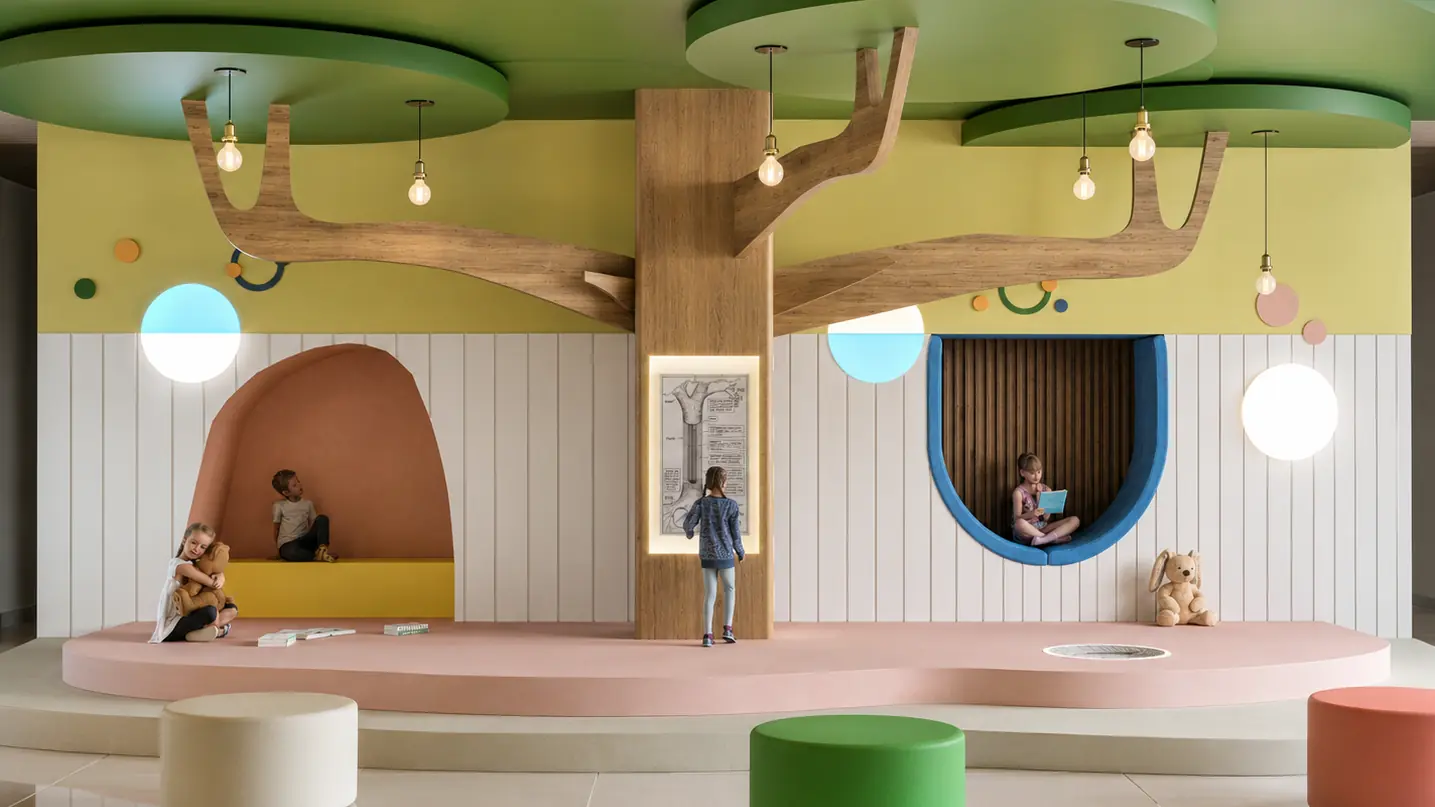
In The Tree Spot, the blue curved reading nook is not only a visual feature. It creates a calm pause inside a playful environment. Kids space design details like this give children a place to sit, observe, read, and reset when the larger room feels active.
2. Use Curves to Soften the Room
Curved forms can make a space feel more child-friendly. A curved bench, platform, ceiling form, or nook can guide movement without feeling rigid. These kids space design details help the environment feel softer, safer, and more welcoming.
3. Layer the Lighting
Lighting changes the emotional tone of a children’s space. Warm pendant lights, gentle wall glow, and controlled brightness can make the room feel calmer. Harsh lighting can make even a beautiful room feel stressful.
4. Choose Materials Children Understand
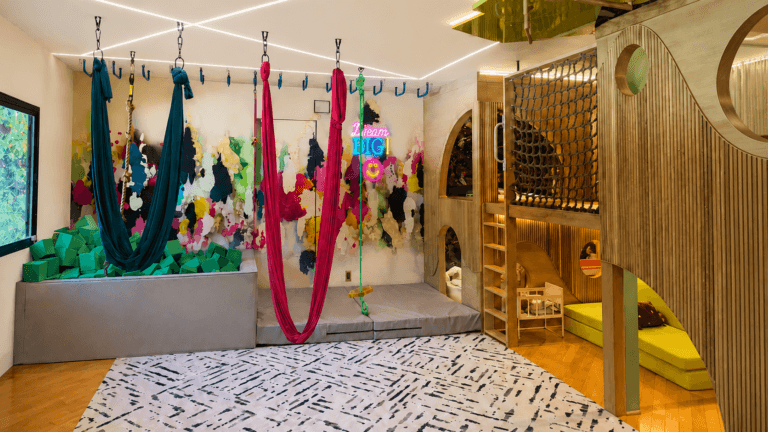
Materials tell children how to use a space. A soft cushion invites sitting. Wood can feel warm and grounded. A raised platform defines a zone. Kids space design details should be selected for touch, durability, cleaning, and the feeling they create.
5. Control the Color Palette
Color should support the experience rather than compete everywhere. A controlled palette can help a kids space feel playful and organized at the same time. Accent colors can highlight special features, while calmer background tones create visual rest.
6. Support Adult Supervision
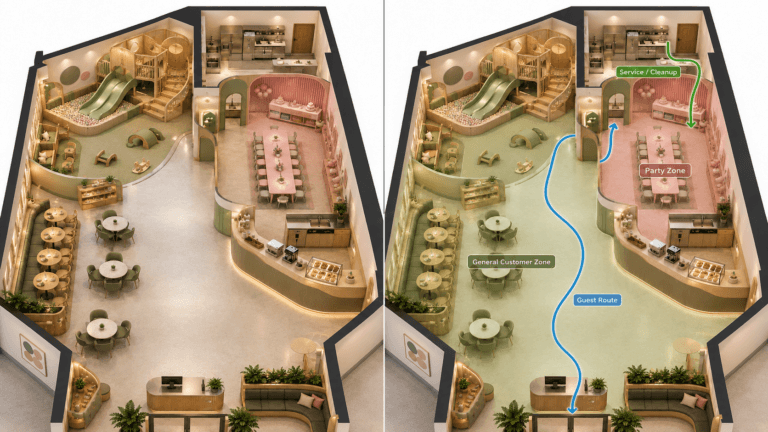
Kids space design details also matter for adults. A nook, platform, or seating area should be positioned so parents and staff can understand what is happening. Good sightlines make a space feel more trustworthy and easier to manage.
7. Match the Space to Child Development
Children experience interiors physically and emotionally. The NAEYC Developmentally Appropriate Practice statement emphasizes joyful, play-based learning and environments that support children’s development. Kids space design details can support that idea by creating places for exploration, choice, comfort, and calm.
The Tree Spot Shows Detail With Purpose
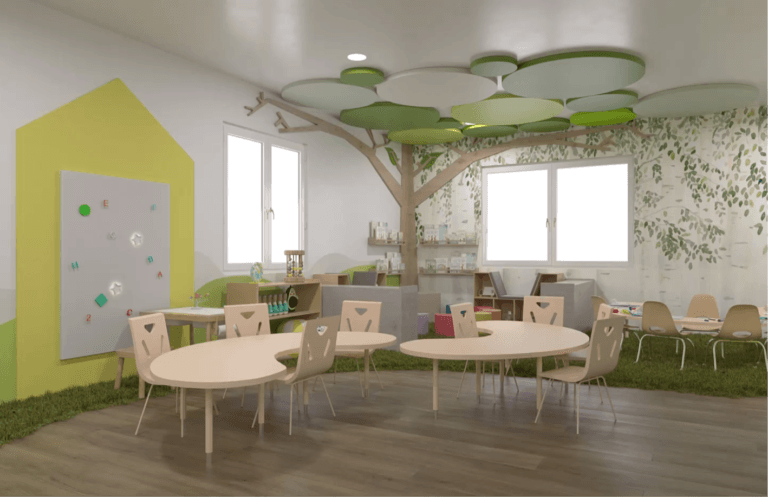
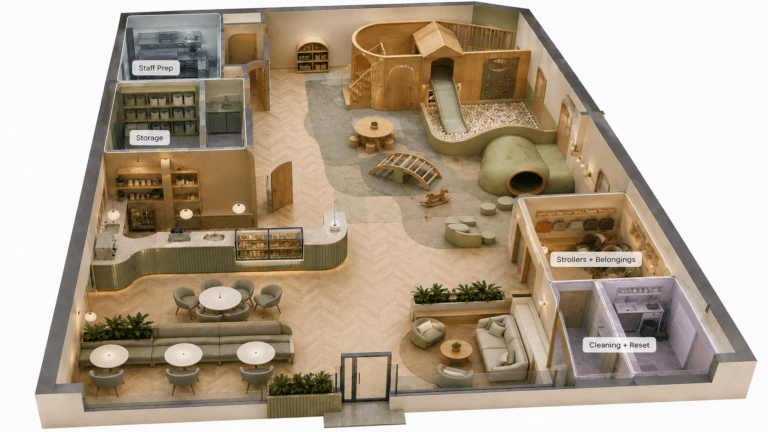
The Tree Spot works because the details belong together. The blue reading nook, tree-inspired wall, pendant lights, soft platform, and calm activity zones support one design story. Kids space design details become powerful when they are connected to the whole room, not added as decoration after the fact.
Planning Kids Space Design Details
Kids space design details should be planned with purpose. Every curve, light, material, color, and nook can support comfort and function. The best children’s interiors are not built from random cute ideas. They are built from details that help children, families, staff, and the business behind the space.
How to Plan Kids Space Design Details Without Adding Clutter
The best kids space design details are usually simple, but intentional. A room does not need more objects to feel more designed. It needs better decisions. A single reading nook, a warmer light, a softer edge, or a better seating position can change how children and adults experience the space. When details are planned around comfort, sightlines, and daily use, the space becomes richer without becoming crowded. This is especially important in commercial children’s interiors, where every feature has to support real movement, cleaning, supervision, and repeat use.
Kids Space Design Details Checklist for Child-Centered Interiors
Use this checklist before finalizing a kids interior concept. Does each detail have a purpose? Does the room include at least one calm pause? Are the curves, colors, lighting, and materials working together? Can children understand how to use the space? Can adults supervise comfortably? Are the details durable enough for daily commercial use? Strong kids space design details should make the room more usable, not only more decorative. The best details help the space feel calmer, more memorable, and more connected to the brand experience.
Featured Project: The Tree Spot